Fertility and Ovulation Window Calculator
Estimate your likely fertile days based on the date of your last period and your average cycle length.
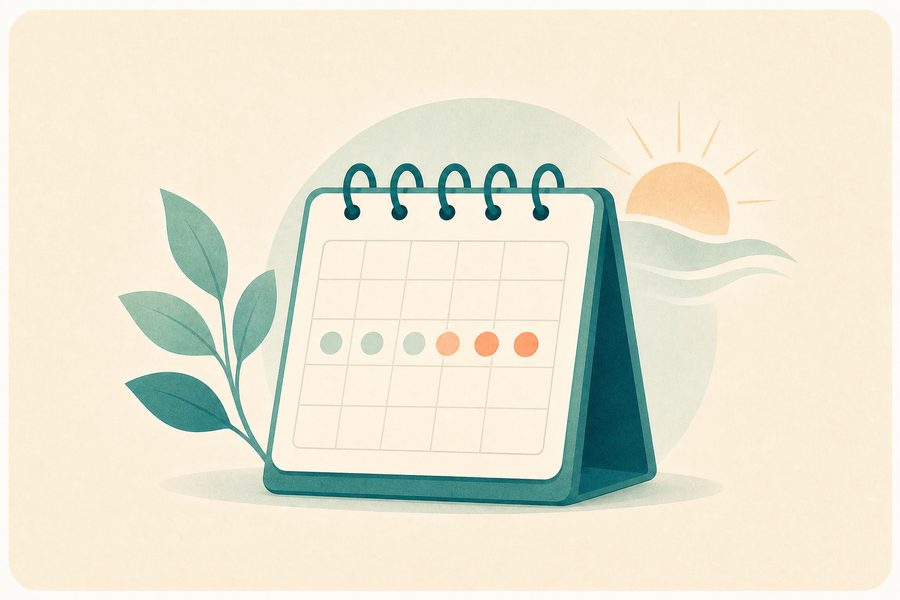
How to read the fertility window?
The calculator uses your average cycle length to estimate ovulation, then shows a range of days when the chance of pregnancy may be higher. This is an educational simplification; ovulation can occur earlier or later.
Record dates
Recording the first day of each cycle for several months gives a better picture of your usual pattern.
Monitor changes
Cervical mucus, temperature, and cycle symptoms may change, but interpreting them requires awareness and they do not confirm fertility on their own.
Do not rely on the calendar alone
If your goal is contraception or you have cycle problems, seek trusted medical advice.
Questions about ovulation and fertility
Is the fertility window guaranteed?
No. It's an indicative estimate that assumes a repeatable cycle pattern and isn't suitable for irregular cycles or all methods of family planning.
How does the calculator estimate ovulation?
It uses an approximate rule assuming ovulation occurs about 14 days before the next period, then displays the five days before, the day of ovulation, and the following day as an approximate window.
When should I seek specialist advice?
If your cycle is very irregular, has been absent for some time, or pregnancy is delayed, consult a doctor or healthcare provider.